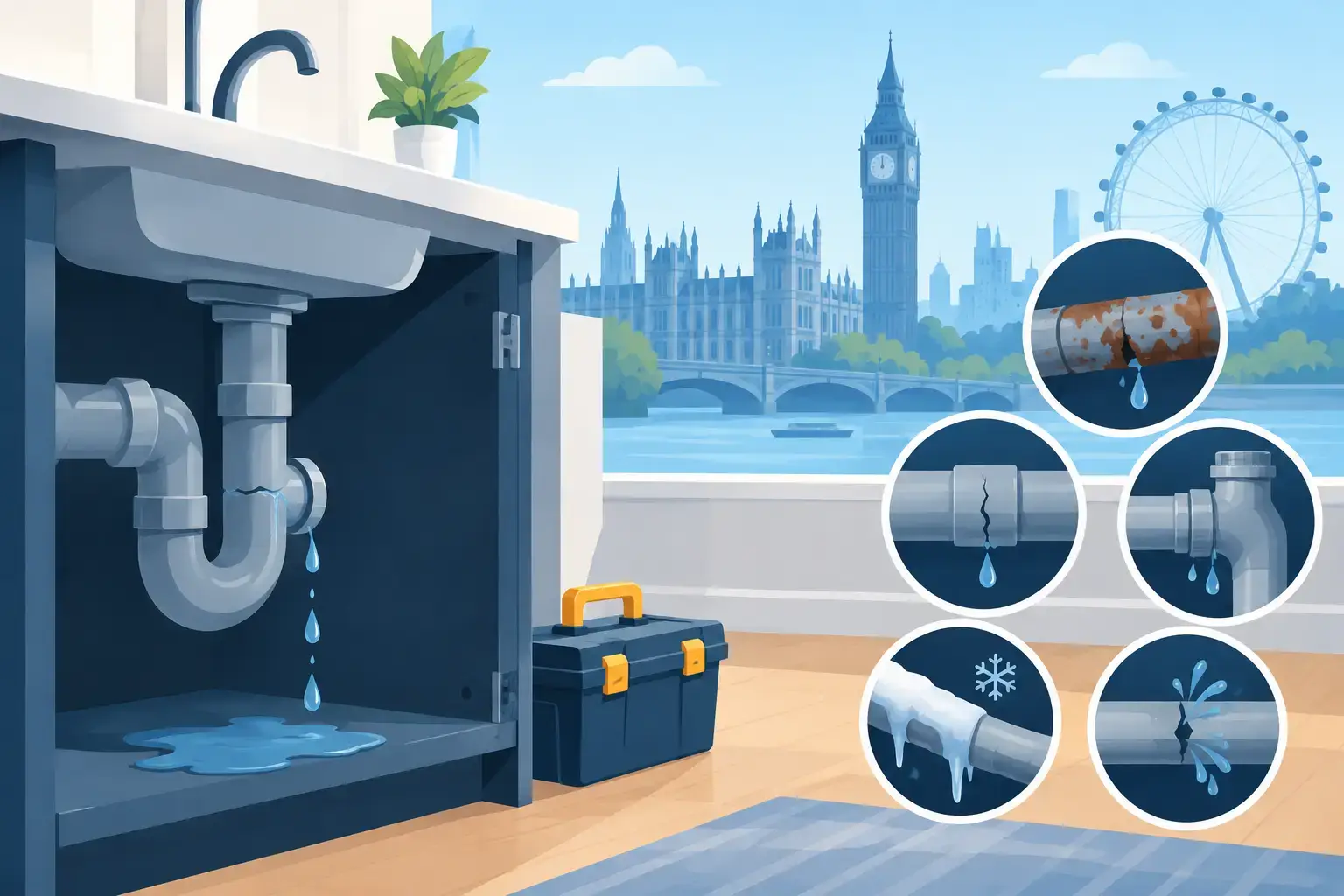
A damp patch beneath the kitchen sink, a stain spreading across the ceiling or a boiler pressure gauge that keeps dropping are not problems to leave for later. The top causes of pipe leaks are often hidden behind boxing, under floors or inside walls, where a small fault can cause costly damage before it becomes obvious.
For homeowners, landlords and managing agents, the priority is simple: stop the water where possible, protect the property and get the cause properly identified. A visible drip is not always the source of the leak. Water can travel along pipework, joists and wall cavities before it appears.
The top causes of pipe leaks
Corroded or ageing pipework
Older London properties often have a mix of pipe materials, particularly where kitchens, bathrooms or heating systems have been altered over the years. Copper pipe can corrode from the inside or outside, while old galvanised steel pipework can rust and gradually restrict water flow. Small pinhole leaks may develop without warning.
Corrosion is more likely around joints, beneath floors, in damp cupboards and where pipes have been poorly supported. It can also be accelerated by unsuitable connections between different metals. If one section has failed, it is worth checking the wider run rather than simply patching the visible hole.
A repair may be enough where the pipework is otherwise sound. If several leaks are appearing in an older system, replacing a longer section can be better value than repeated call-outs and repeated water damage.
Frozen pipes and rapid temperature changes
Cold weather remains a common reason for burst pipes, especially in lofts, garages, outside cupboards and vacant properties. Water expands as it freezes. A pipe may split while frozen, but the leak often becomes clear only when temperatures rise and the ice thaws.
Pipes in external walls and unheated areas need proper insulation. Landlords should also make sure tenants know where the internal stopcock is and how to use the heating controls during a cold spell. Leaving a property empty without frost protection can turn a minor cold-weather issue into a serious flood.
Do not use a naked flame to thaw a frozen pipe. Gentle warmth and professional advice are safer, particularly near gas appliances, electrical cables or concealed pipework.
High water pressure
Excessive mains pressure places constant strain on pipe joints, flexible hoses, valves and appliance connections. It can make existing weak points fail sooner. Warning signs include banging pipes, splashing from taps, appliances that fill noisily and recurring drips at valves or connections.
Pressure problems are not always straightforward. The incoming mains pressure may be high, or a pressure-reducing valve may have failed or been incorrectly fitted. Central-heating pressure is a separate issue and can point to problems with the filling loop, expansion vessel, pressure-relief valve or boiler system.
A plumber can test the pressure and identify whether the problem is on the mains supply, within the plumbing system or linked to the heating system. Turning a valve at random can create another fault, so this is one for proper diagnosis.
Failed joints, seals and fittings
Not every leak comes from a damaged pipe. Compression fittings, soldered joints, plastic push-fit connections and appliance hoses can all fail if they were poorly installed, disturbed during building work or simply worn out.
Under-sink pipework is a regular trouble spot. Cleaning products, stored items and everyday knocks can loosen waste fittings or damage seals. A slow waste-pipe leak may only show up as swelling to a kitchen unit, a musty smell or damaged flooring.
Bathroom leaks can be harder to trace. Failed silicone around a bath or shower tray can allow water into the floor or ceiling below, looking very much like a burst pipe. A proper inspection separates plumbing faults from failed seals and avoids spending money on the wrong repair.
Blockages and pressure build-up in waste pipes
Blocked drains and waste pipes do not always cause an immediate leak, but they can force water back through weak joints, overflow from appliances or expose a defective section of pipework. Fat, food waste, wipes, hair and scale are frequent causes in domestic properties.
In commercial kitchens, misuse of the drainage system and a lack of regular maintenance can quickly create repeat problems. The right fix depends on where the restriction is. Clearing a trap may solve a local blockage, while persistent backing-up may require investigation of the branch pipe or external drainage.
Never assume a chemical drain cleaner is the answer. These products can be hazardous, may not shift a serious blockage and can damage certain pipework or seals if repeatedly used.
Movement, vibration and poor pipe support
Pipes expand and contract as hot and cold water passes through them. If they are tightly trapped against timber, brickwork or other services, the movement can strain a joint over time. Heating pipes are particularly affected because they heat up and cool down repeatedly.
Vibration from washing machines, pumps and boilers can also loosen fittings where pipework has not been clipped securely. You may hear tapping, rattling or knocking when taps are turned on or the heating starts. These sounds should not be ignored if they are new or becoming worse.
During refurbishments, pipework can be moved, boxed in or accidentally damaged by screws and fixings. If a leak starts shortly after work has been carried out, get it checked promptly and avoid covering the affected area before the source is confirmed.
Boiler and central-heating faults
A falling boiler pressure gauge is often treated as a boiler-only issue, but it can indicate a leak somewhere on the heating system. The leak may be at a radiator valve, beneath floorboards, on concealed heating pipework or at a component within the boiler.
Small heating leaks can evaporate before they leave a visible mark, particularly on hot pipes. Look for green or white deposits around copper fittings, rusty radiator valves, unexplained pressure loss and staining near pipe penetrations. Regularly repressurising a sealed heating system without finding the cause is not a long-term repair.
Gas Safe registered engineers should handle work involving the boiler and its associated controls. Onsite Contractors and Plumbing Ltd can investigate heating-related leaks alongside boiler and central-heating faults, helping avoid separate visits where the systems are connected.
External damage and ground movement
Outside pipework can crack due to impact, poor protection, frost or movement in the ground. Tree roots may affect drainage runs, while building settlement can put stress on buried pipes and older connections. These faults may show up as a wet patch in the garden, reduced water pressure, repeated drain blockages or an unexplained increase in the water bill.
External leaks need a measured approach. Digging before the route of the pipe has been established can damage services or make the repair more disruptive than necessary. Investigation should establish whether the affected pipe is a private supply, internal drainage run or part of the utility network.
Signs a hidden leak may be developing
Some leaks announce themselves with a steady drip. Others leave quieter clues. A persistent damp smell, peeling paint, warped laminate, mould in an unusual place or a water meter that continues moving when all outlets are off can all point to a hidden issue.
Pay close attention to ceilings below bathrooms, kitchens and boiler cupboards. A brown ring or a soft, bulging area means moisture has already travelled through the structure. Switch off electrical circuits in the affected area if water is close to light fittings, sockets or wiring, and seek urgent professional help.
For landlords, reports of low boiler pressure, mould or a higher-than-normal water bill should be logged and investigated. Quick action protects the tenant, limits disruption and reduces the chance of a larger insurance claim.
What to do when a pipe is leaking
If water is escaping quickly, act first and investigate second. Take these practical steps:
- Turn off the internal stopcock if the leak is on the mains water supply. It is commonly located under the kitchen sink, near the front entrance or beside the water meter.
- Turn off the heating system if the leak appears to involve a radiator, heating pipe or boiler. Do not remove boiler panels or interfere with gas components.
- Move furniture, electrical items and valuables away from the water, then contain drips with towels and buckets where safe.
- Take clear photographs of the damage and the suspected source, particularly if you need to inform a landlord, managing agent or insurer.
Avoid wrapping a leaking pipe in tape and assuming the problem has gone away. Temporary measures may slow a drip, but they do not deal with corrosion, pressure issues or a failing fitting. Water can continue escaping behind the repair.
Reducing the risk of repeat leaks
A few checks can prevent many avoidable failures. Insulate exposed pipes before winter, service the boiler as recommended, keep waste pipes clear and avoid using cupboards under sinks as storage for heavy items that can strike fittings. After any building work, test taps, wastes, radiators and appliances before areas are closed up.
For older homes and rental portfolios, planned inspections are useful where there is ageing pipework, a history of leaks or long periods when properties are empty. The aim is not to replace pipework unnecessarily. It is to find weak points before a ceiling, floor or tenant’s belongings are affected.
A leak rarely improves by itself. If you have noticed damp, pressure loss, staining or an unexplained rise in water use, arrange an inspection while the repair is still likely to be straightforward.