A puddle beneath a radiator can look minor at first, but it can quickly damage flooring, stain ceilings below and leave your heating system losing pressure. Understanding why radiators leak helps you act quickly, protect your property and know when the problem needs a professional repair rather than a temporary fix.
The first job is to identify where the water is coming from. Dry the radiator and surrounding pipework with a towel, then watch carefully for fresh moisture. A leak from a valve, bleed point, pipe joint or the body of the radiator points to different faults and different repairs.
Why radiators leak in homes and flats
Most radiator leaks fall into one of a few familiar categories. Some are straightforward, such as a loose valve connection. Others indicate corrosion inside an ageing central-heating system, which needs a more considered repair.
Leaking radiator valves
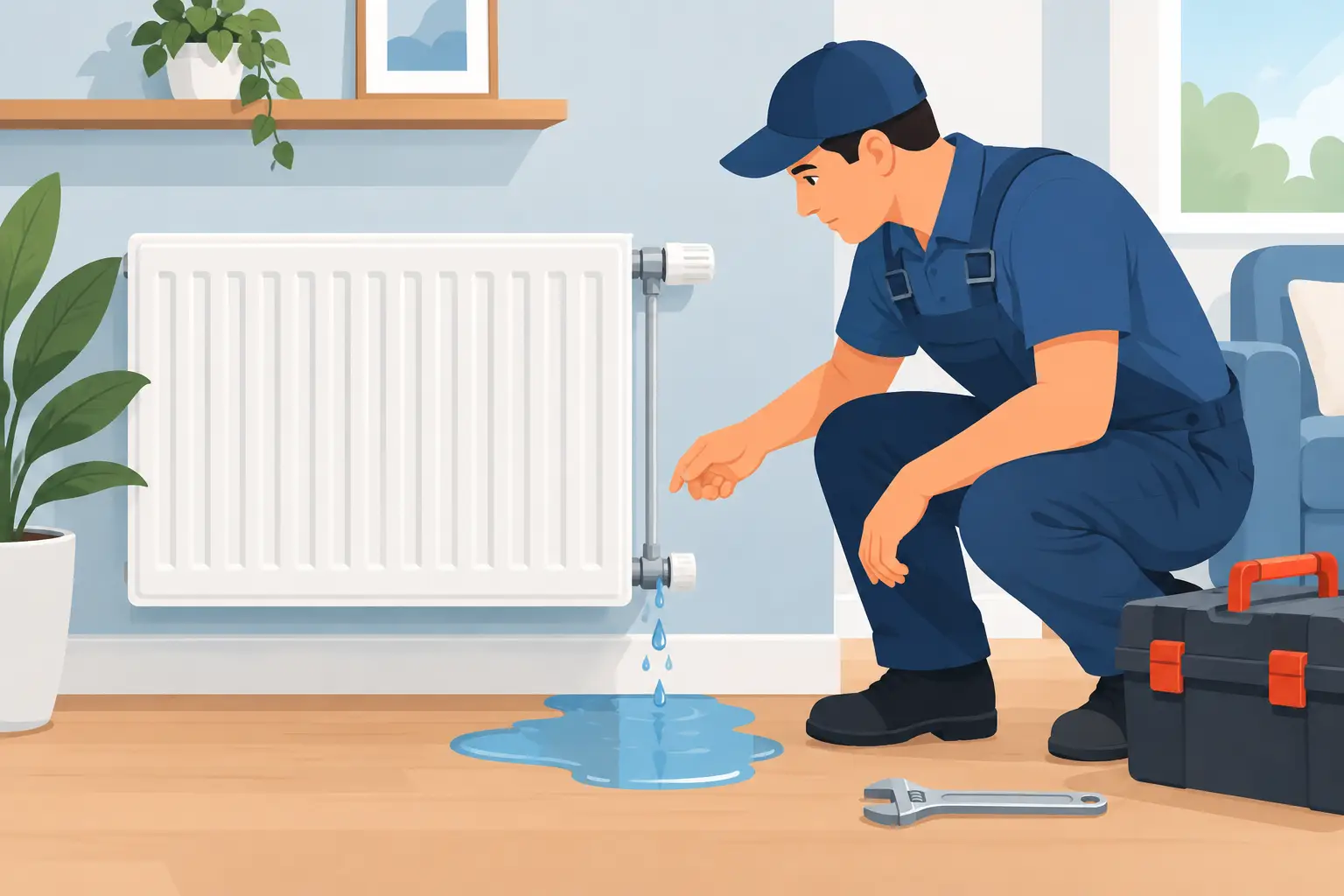
The valves at the bottom of a radiator are among the most common places for a leak. This includes the thermostatic radiator valve, which controls heat output, and the lockshield valve on the other side, used when balancing the system.
Water may appear around the spindle, where the valve turns, or at the compression nut connecting the valve to the pipe. In some cases, a small adjustment or replacement washer can solve the issue. In others, the valve body has failed and should be replaced.
Avoid forcing a stiff valve or repeatedly tightening fittings without knowing the cause. Overtightening can damage threads, distort a joint and turn a drip into a more serious leak.
Water from the bleed valve
A bleed valve sits near the top of the radiator and allows trapped air to be released. If it is leaking, the square spindle may not be fully closed, the small internal seal may have worn out, or the valve may be corroded.
If the leak began immediately after bleeding the radiator, check that the valve is gently closed using a bleed key. Do not use excessive force. If it still drips after being closed, or the fitting is damaged, it needs replacing.
Keep in mind that frequent air in radiators is not always normal. It can be linked to poor system pressure, a fault elsewhere in the heating system or corrosion creating gas within the water. A heating engineer can assess the wider issue instead of simply treating the symptom.
Corrosion in the radiator itself
When water seeps through the radiator panel, usually near the bottom or along a seam, internal corrosion is often the cause. Over time, sludge and debris settle in low points of the system. This can eat away at metal from the inside until pinholes form.
A corroded radiator is rarely a reliable candidate for patching. Sealants may slow a very small leak temporarily, but they do not restore weakened metal. Replacement is generally the proper long-term answer, followed by cleaning and protecting the system where appropriate.
If one radiator has corroded, it is sensible to inspect the condition of the wider heating system. Cold spots, dirty water when bleeding radiators and repeated boiler pressure loss can all suggest sludge or corrosion is affecting more than one component.
Leaking pipework and radiator joints
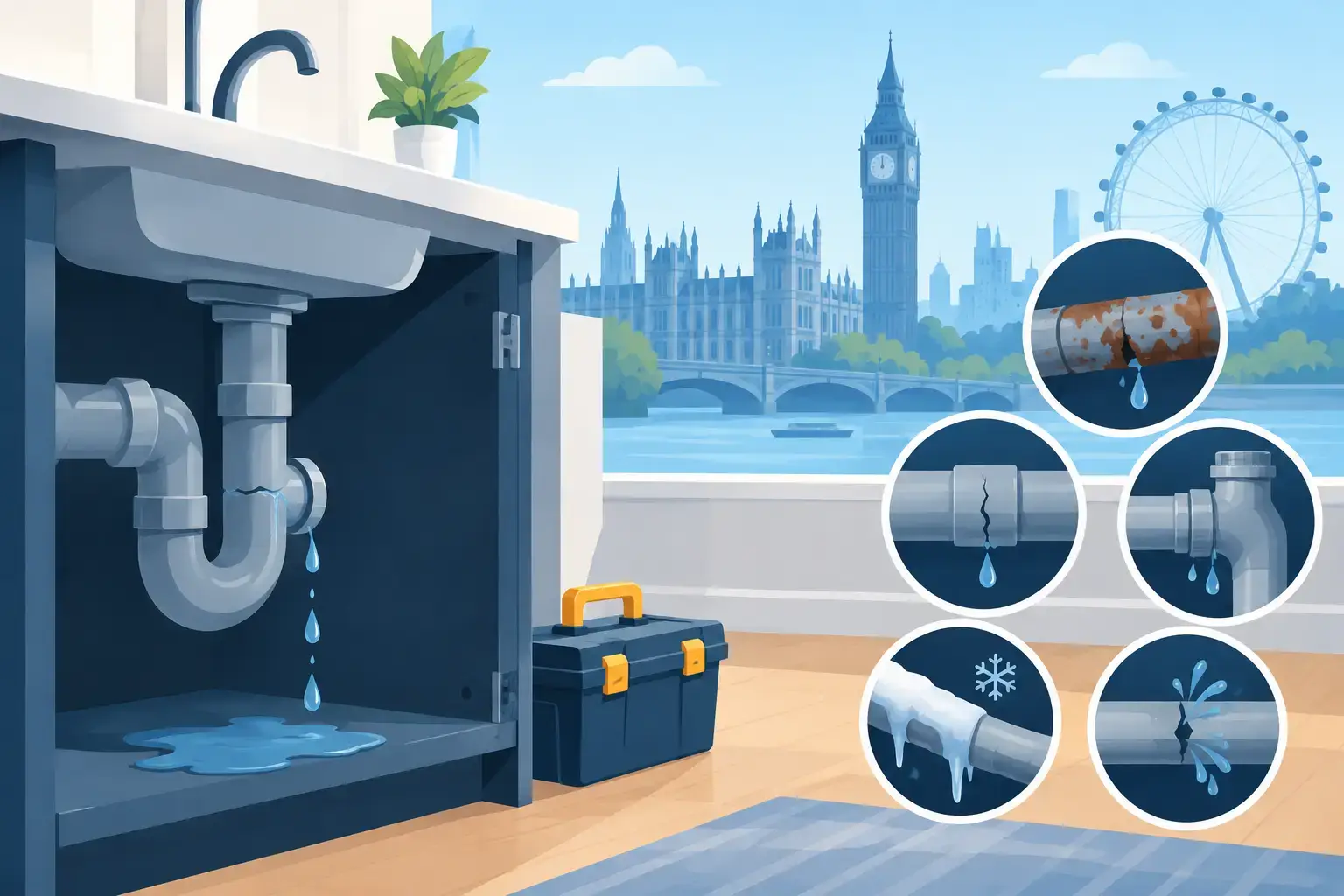
Not every apparent radiator leak is coming from the radiator. Pipes beneath the floor, behind boxing or within a wall can leak and travel along surfaces before becoming visible nearby. The same applies to joints behind a radiator.
Copper pipework can develop leaks at old soldered or compression joints. Plastic pipework may fail at fittings, particularly where it has been poorly installed or placed under stress. A slow hidden leak can cause damp patches, warped laminate, mould and damage to neighbouring properties in flats.
If you cannot see the source but pressure keeps dropping or water damage is appearing, arrange an urgent inspection. Finding the leak early is far cheaper than repairing a damaged floor, ceiling or wall later.
What to do when a radiator starts leaking
Your response depends on the amount of water and where it is coming from. A few drops from a valve deserve attention, but a steady flow needs immediate action.
First, protect the area with towels, a tray or bucket and move furniture away from the water. Switch off the central heating and allow the radiator to cool before touching valves or fittings. Hot radiator water can cause burns.
If water is clearly coming from one valve, you may be able to turn both radiator valves clockwise to isolate that radiator. This can reduce or stop the flow while you wait for a repair. Do not attempt this if the valve is badly corroded, loose or already spraying water.
For a significant leak, shut off the water supply if necessary and contact an emergency plumber. If water is near sockets, electrical equipment or wiring, do not touch electrical items. Turn off the electricity at the consumer unit only if it is safe to do so, then seek urgent help.
Do not add random leak sealants to a pressurised heating system. They can cause further issues, clog components and make diagnosis harder. Likewise, do not remove a radiator while the system is hot or pressurised.
Why a radiator leak can affect your boiler
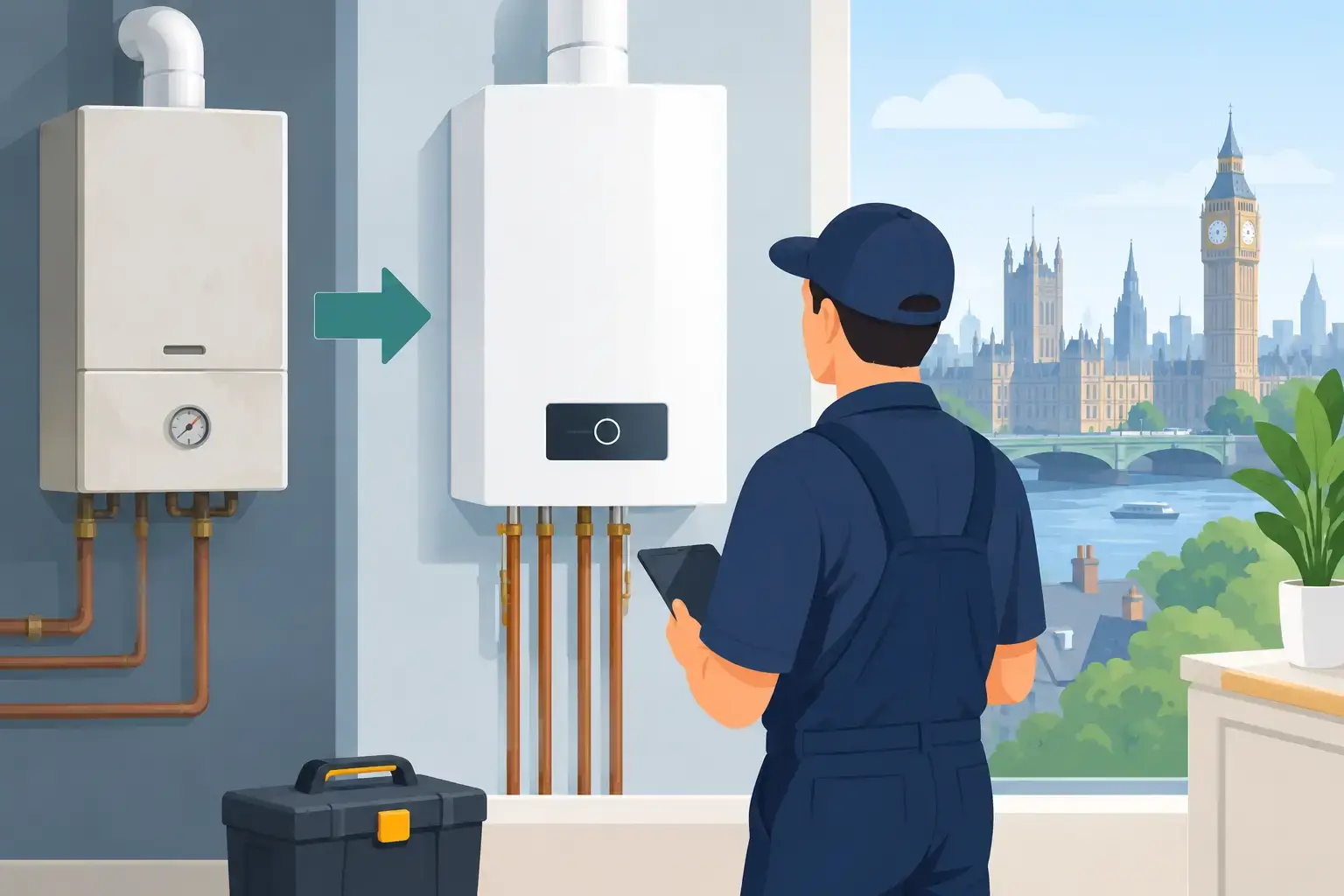
A sealed central-heating system relies on stable pressure to circulate hot water properly. When a radiator or pipe leaks, the pressure on your boiler can fall. You may notice the pressure gauge dropping, radiators going cold, boiler error codes or the boiler shutting down altogether.
Topping up boiler pressure may bring heating back temporarily, but it does not fix the leak. Repressurising repeatedly introduces fresh water and oxygen into the system, which can contribute to further corrosion. If your boiler pressure keeps falling, treat it as a fault that needs investigating.
There is also a difference between a radiator leak and water released from the boiler pressure relief pipe outside. Both can point to a pressure problem, but the source and repair are different. A qualified heating engineer should diagnose boiler-related faults, especially where safety devices, expansion vessels or internal components may be involved.
When to arrange an emergency plumber or heating engineer
Call for urgent help when the leak is continuous, flooding a room, coming through a ceiling or affecting electrics. The same applies if your boiler has lost pressure and stopped working during cold weather, particularly where there are children, older residents or vulnerable occupants in the property.
Landlords and property managers should act promptly too. Water leaks can escalate quickly in shared buildings, and a heating failure may leave tenants without adequate heat or hot water. Keeping a record of the fault, the damage and the repair work is also good property management.
For London homes, flats and commercial premises, Onsite Contractors and Plumbing Ltd can assess radiator leaks, failed valves, damaged pipework and heating pressure problems. The aim is not to sell unnecessary work. It is to find the source, explain the repair clearly and get the system working safely again.
Preventing future radiator leaks
Not every leak is preventable, especially in older systems, but regular attention reduces the risk. Have boilers serviced at the recommended interval, deal with pressure loss early and avoid ignoring cold patches or discoloured radiator water.
If your heating system is older or has a history of sludge, ask about a system clean and suitable inhibitor treatment. These measures can help protect radiators, pipework and boiler components from internal corrosion. The right approach depends on the condition of the system – a heavily corroded radiator may still need replacement.
Check beneath radiators occasionally, particularly at the start of the heating season. A dry white or greenish residue around a valve can be an early sign of a slow leak, even before water starts pooling.
A radiator leak is not always a major emergency, but it is never worth leaving to chance. Stop the water where safe, protect the property and get the cause repaired before a small drip becomes a damaged home and a failed heating system.